by Dale Bertrand ⏐ July 4 2026
“The C-suite has blank checks for AI problems right now. They don’t want to hear that GEO is it’s just SEO. They want a strategy.”
That’s a direct quote by Mike King, founder of iPullRank and creator of “relevance engineering.” I sat down with him recently to talk about what marketers need to know about AI search. His perspective surprised me.
Right now, leadership is paying attention to AI visibility. They have budget. They want someone who can coordinate across departments and articulate a plan. But when someone walks in and says “it’s basically just SEO,” the conversation ends. Budget disappears.
Mike put it bluntly: “Then they’re going to be like, oh, well, I got a guy to sit in the corner writing meta tags for me right now, so I don’t need to invest in this, do I?”
This article gives you the strategy they’re looking for.
Why SEO Tactics Don’t Work for AI Search
SEO built the modern web. Every website looks similar because that’s how Google consumed content. H1 tags. Bulleted lists. Keyword-laden paragraphs at the top.
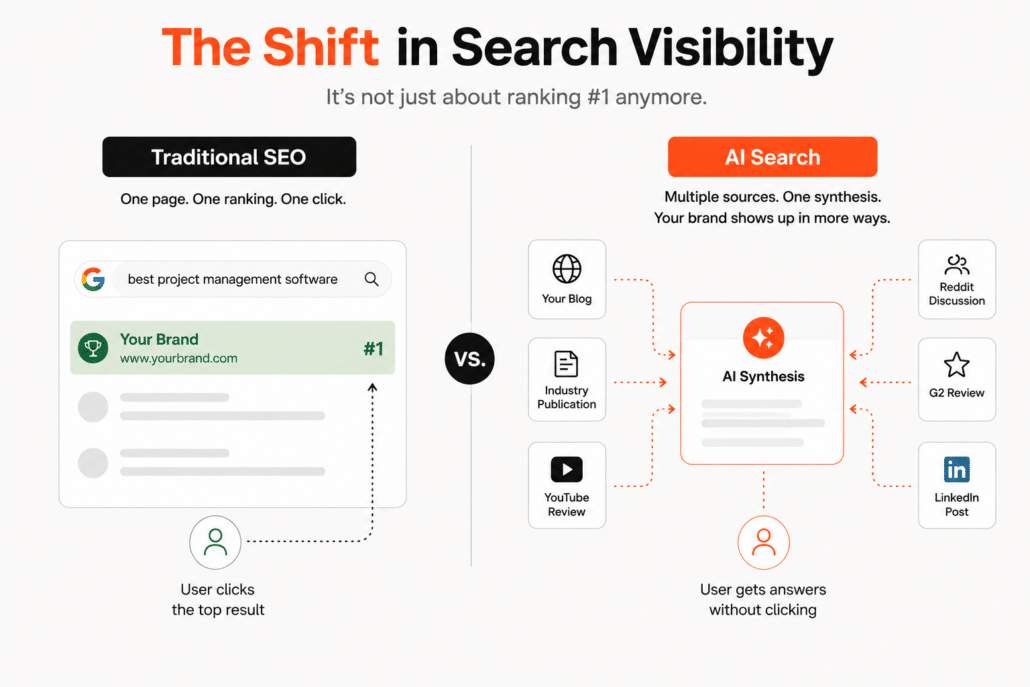
AI search platforms work differently. They don’t just rank pages. They synthesize information from across the web. They make recommendations based on what the internet thinks about your brand.
Mike explained it this way: “If five out of six sources say your brand is the answer, AI will recommend you. If you only show up once, you disappear.”
Here’s what that means:
- One page ranking first isn’t enough. AI platforms want corroboration across domains.
- Surface area matters more than position. You need content across website, social, PR, videos, and third-party platforms.
- Bots are now your primary audience. More AI bots consume the web than humans do.
I used to think SEO was about building the perfect page. Now I think about building confidence across the entire web.
How to Build Visibility Across ChatGPT, Perplexity, and AI Overviews
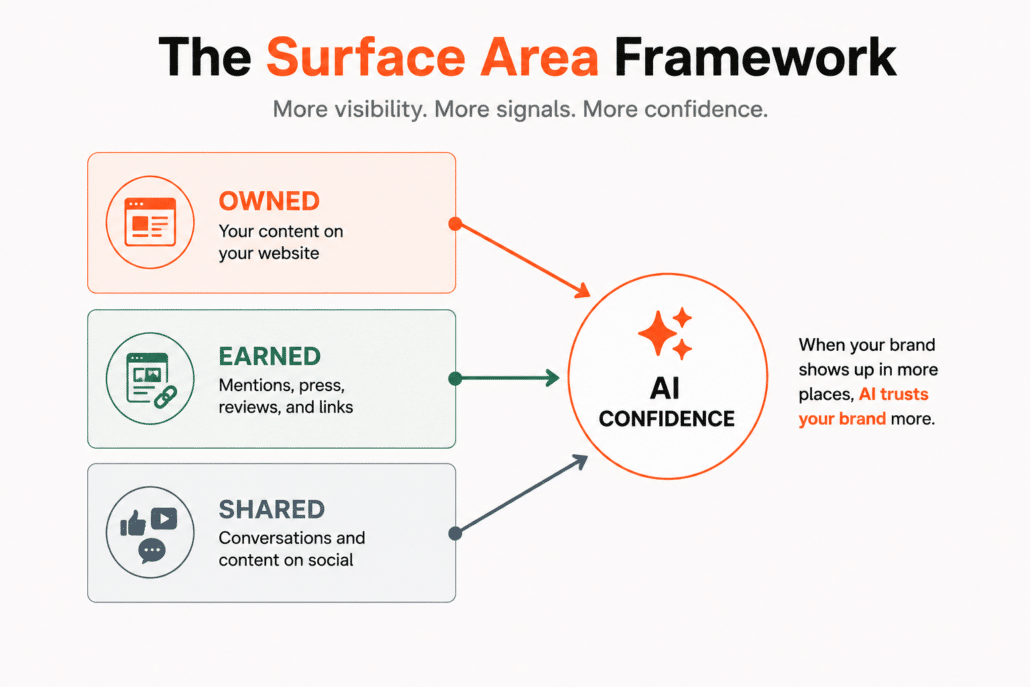
The brands winning in AI search aren’t optimizing one page at a time. They’re expanding their digital surface area across three layers.
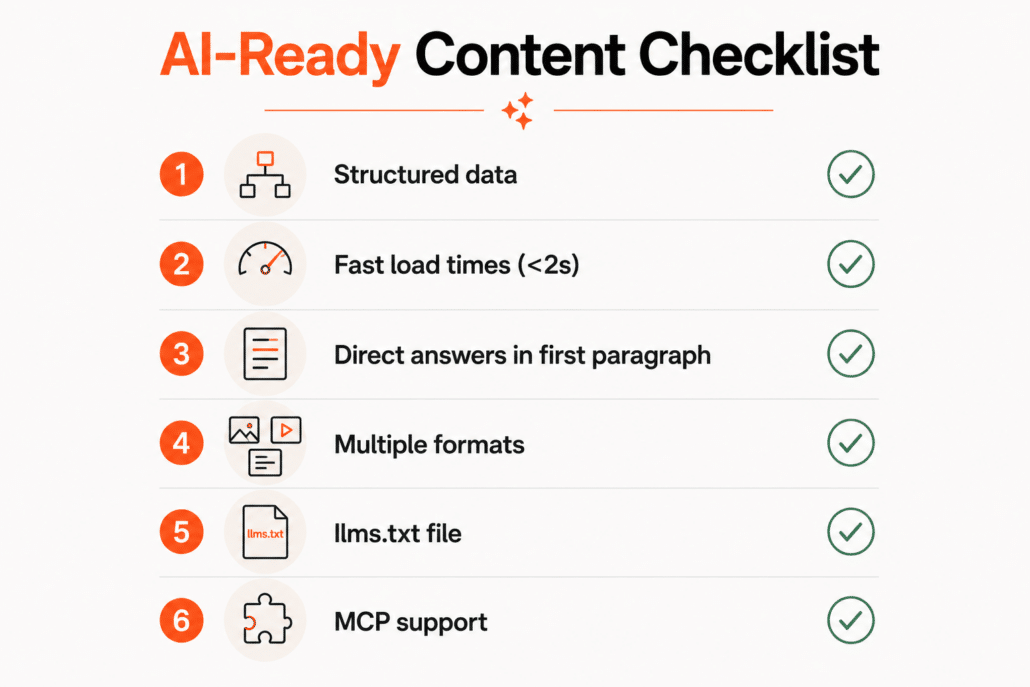
Owned Surface Area: Your website, product pages, blog. This means structured data beyond basic rich snippets, direct answers to specific questions, and fast-loading pages. Mike highlighted an overlooked detail: AI crawlers return a 499 status code if your page is too slow. That means the client gave up waiting. Quickest fix? Cache pages at the edge in your CDN.
Earned Surface Area: PR placements, media mentions, Wikipedia references. AI models look for repeated signals across domains. Links still matter, but volume-based link building does not. Mike was direct: “If your competitor has fifty links and you build sixty, that doesn’t do anything.” Google stratifies its index into four buckets: high, medium, low, and fresh docs. Most link building comes from pages in the low-quality bucket. Those links get heavily discounted.
Shared Surface Area: LinkedIn, YouTube, Reddit, podcast appearances. If your expertise exists only in blog articles, you’re fragile. If it exists as articles, videos, interviews, and third-party citations, you’re resilient.
How AI Search Engines Find and Choose Content
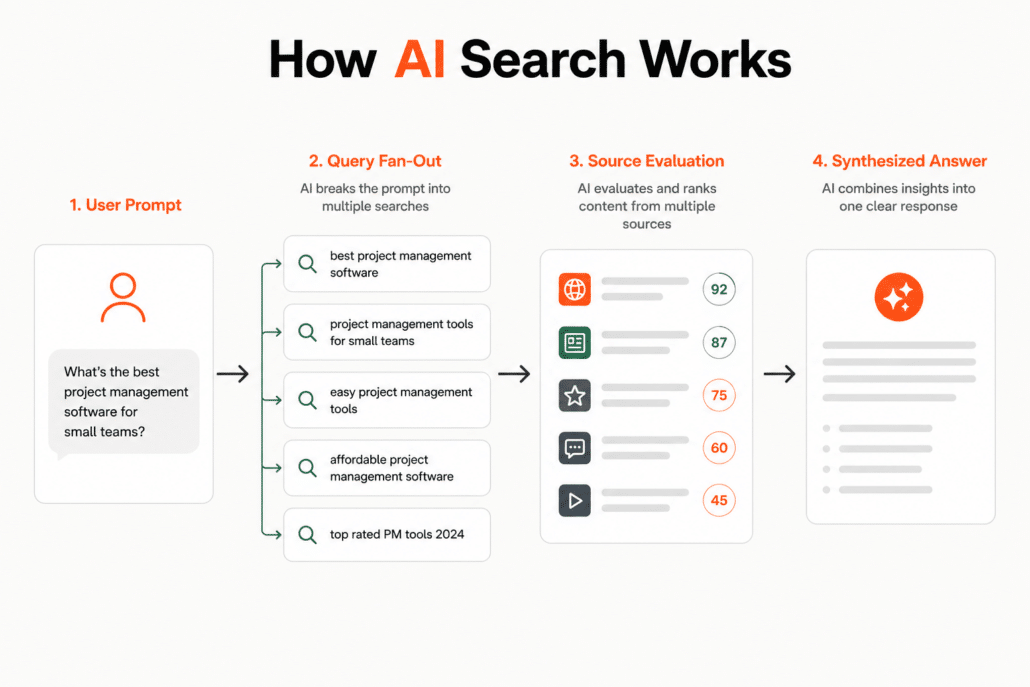
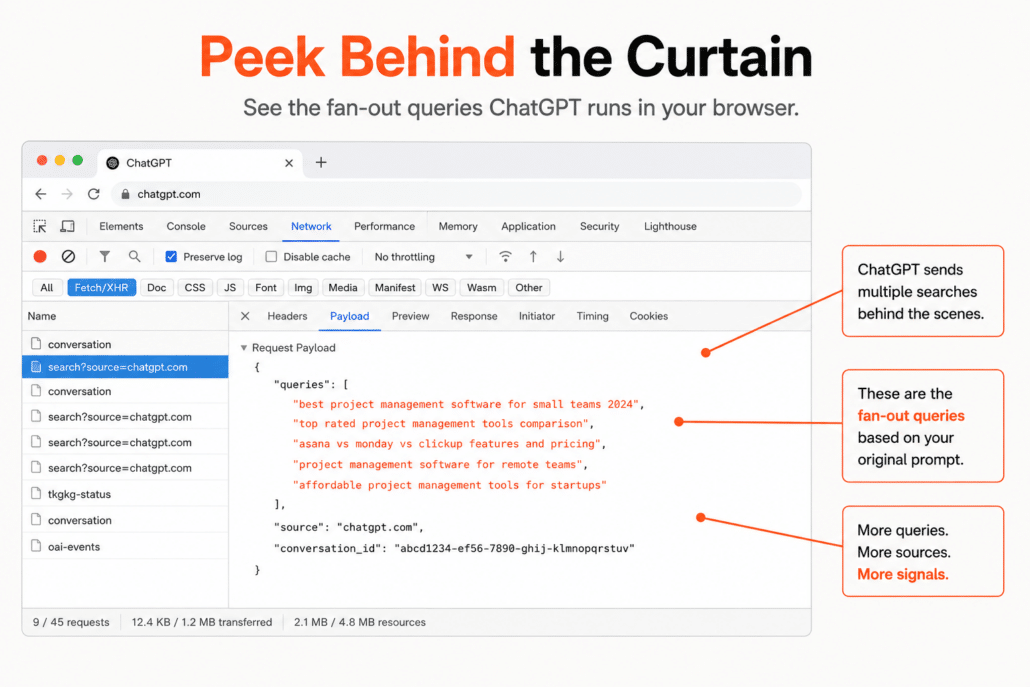
When a user asks ChatGPT a question, the system doesn’t run one search. It runs many. It reformulates the query, adds qualifiers, searches specific domains, compares brands.
Each background search is a chance to win or lose visibility.
You can see these queries yourself. Open developer tools while using ChatGPT. Watch what searches it runs. The queries are often very specific. You won’t find them in traditional keyword research tools.
Your content must exist in the paths AI systems traverse. That requires:
- Interrogating the model. Ask the AI why it chose certain sources. You couldn’t ask Google why you ranked second. You can ask ChatGPT why it recommended a competitor.
- Mapping synthetic queries. Identify how prompts expand beyond primary keywords.
- Creating content aligned to expected formats. If the model expects a checklist, build one. If it expects video, produce it.
AI Search Content Strategy: What to Create Now
Four shifts that matter now:
- Stop publishing thin AI-generated content. Generating 1,000 words from a generic prompt is noise. Scaled content works when it incorporates proprietary data and solves real user problems.
- Use your product data intelligently. For ecommerce brands, feed product attributes into models. Generate comparison content. Highlight differentiators. AI systems look for entities and features.
- Expand across formats. Video explainers, FAQs, comparison tables, interactive tools. Surface area matters more than volume on one URL.
- Implement AI-friendly protocols. Structured data at scale, markdown-ready content, MCP support, llms.txt. Claude uses llms.txt heavily, and Google has added it to their agent-readiness checklist.
AI Search Optimization Mistakes to Avoid
Mike was blunt about tactics that waste time. Three mistakes keep showing up.
- Stop volume-based link building. Links from low-traffic domains contribute almost nothing.
- Stop treating AI search as a bolt-on. This is a cross-functional initiative touching PR, content, product, and engineering.
- Stop saying “it’s just SEO.” When you position this as a minor tactical adjustment, someone else steps in with a broader mandate.
How to Start with AI Search Optimization
Mike’s advice: be curious.
Open ChatGPT right now. Ask questions your customers would ask. See if you show up. Open your browser console. Watch what searches the system runs. Ask the AI why it chose what it chose.
You’ll learn more in thirty minutes than from months of keyword research.
Your customers are shifting how they search. They’re using decision engines like Google to compare and purchase. They’re using information engines like ChatGPT that feel like conversations with trusted experts.
Traffic will decline. But visitors will be more qualified because AI is pre-qualifying them.
This isn’t about optimizing one page to rank first anymore. It’s about ensuring your brand survives the synthesis of AI-generated answers. That requires presence across multiple platforms and strategic thinking about how AI builds confidence in your brand.
Stop chasing tactics. Start building strategy. The C-suite has budget for this.
And if you’d like to watch this webinar, here is the full replay of my conversation with Mike.

Dale Bertrand is a marketer with extensive technical experience and an engineering mind. He focuses on SEO, content marketing and analytics for e-commerce and manufacturing companies. Before founding Fire&Spark, Dale built the machinery that runs the internet and managed marketing programs for Fortune 500 companies.