Table of Contents
Key Takeaways
- The roll-out of the CMS ACCESS Model will let digital health companies bill Medicare directly for serving any Traditional Medicare beneficiary with qualifying chronic conditions—unlocking a massive new audience beyond your existing MA and commercial contracts.
- This isn’t a replacement for your current B2B2C strategy. It’s a massive expansion: new TAM, new channels, new levers for growth.
- With 90% of adults 65+ now online, SEO becomes a critical channel for reaching this newly accessible population—one that can’t be targeted through traditional list-based methods.
- The companies that build organic search authority now will have a significant advantage when ACCESS launches in July 2026.
- An AI-ready digital health SEO strategy will focus on conversions, not traffic, going beyond traditional blog posts to build an intuitive funnel designed especially for a senior population.
A Rare Channel Unlock for B2B2C Marketers
If you’re a growth leader at a digital health company serving Medicare populations, you already know how constrained your channel mix can be.
You’ve built lots of sophisticated programs, including predictive models using eligibility and claims data, multi-channel outreach via email, SMS, and outbound calls, co-branded campaigns with payer and provider partners. But you’re also familiar with the limitations: partner permissions, HIPAA constraints, and the inability to use paid search or social against your lists without handing over PII to Google or Meta.
The CMS ACCESS Model doesn’t eliminate any of that. Your MA contracts and B2B2C partnerships remain as valuable as ever.
What ACCESS does is open a door that’s, to this point, been closed: direct access to Traditional Medicare beneficiaries—a population of roughly 34 million people you’ve historically had limited ability to reach through performance marketing channels.
Needless to say, the opportunity for those who can plan ahead and stake their claim in this market is massive.
What the ACCESS Model Actually Changes
How It Works Today
In the current B2B2C model, you contract with a Medicare Advantage plan or health system. They provide access to their member populations—typically through eligibility files, claims data, and co-branded outreach. It is then on the growth leader within the brand to deploy sophisticated targeting using predictive models and reach members through email, SMS, direct mail, and outbound calls.
This works, but it has its boundaries. You’re limited to the populations your partners give you access to, and certain high-performing channels (like paid search and social) are largely off-limits because of PII and compliance constraints.
What ACCESS Adds
The CMS ACCESS Model—announced in December 2025 and launching in July 2026—is a voluntary, 10-year program that allows participating digital health organizations to bill Medicare directly for delivering technology-supported care to any Original Medicare beneficiary with qualifying chronic conditions.
The conditions covered represent needs that many of the 34-million on Medicare have: hypertension, diabetes, chronic kidney disease, depression, anxiety, chronic musculoskeletal pain, and more. Together, these affect more than two-thirds of Medicare beneficiaries.
Unlike Medicare Advantage contracts, there’s no eligibility file. Beneficiaries can enroll directly with your organization—on their own or through a provider referral.
Why This Should Cause A Rethink of Your Marketing Channel Strategy
For the first time, you can deploy broad demand-capture tactics—including SEO, paid search, and content marketing—against the Traditional Medicare population.
Your existing B2B2C efforts will continue, but ACCESS will give you massive new levers and a huge new audience. That’s not a small thing. Just think how many payer contracts you’d need to otherwise sign to suddenly get access to another 34-million people!
The Search Opportunity You Shouldn’t Ignore
There’s a persistent assumption in digital health that seniors don’t search for healthcare online. A decade ago, that assumption had some merit. Today, it doesn’t.
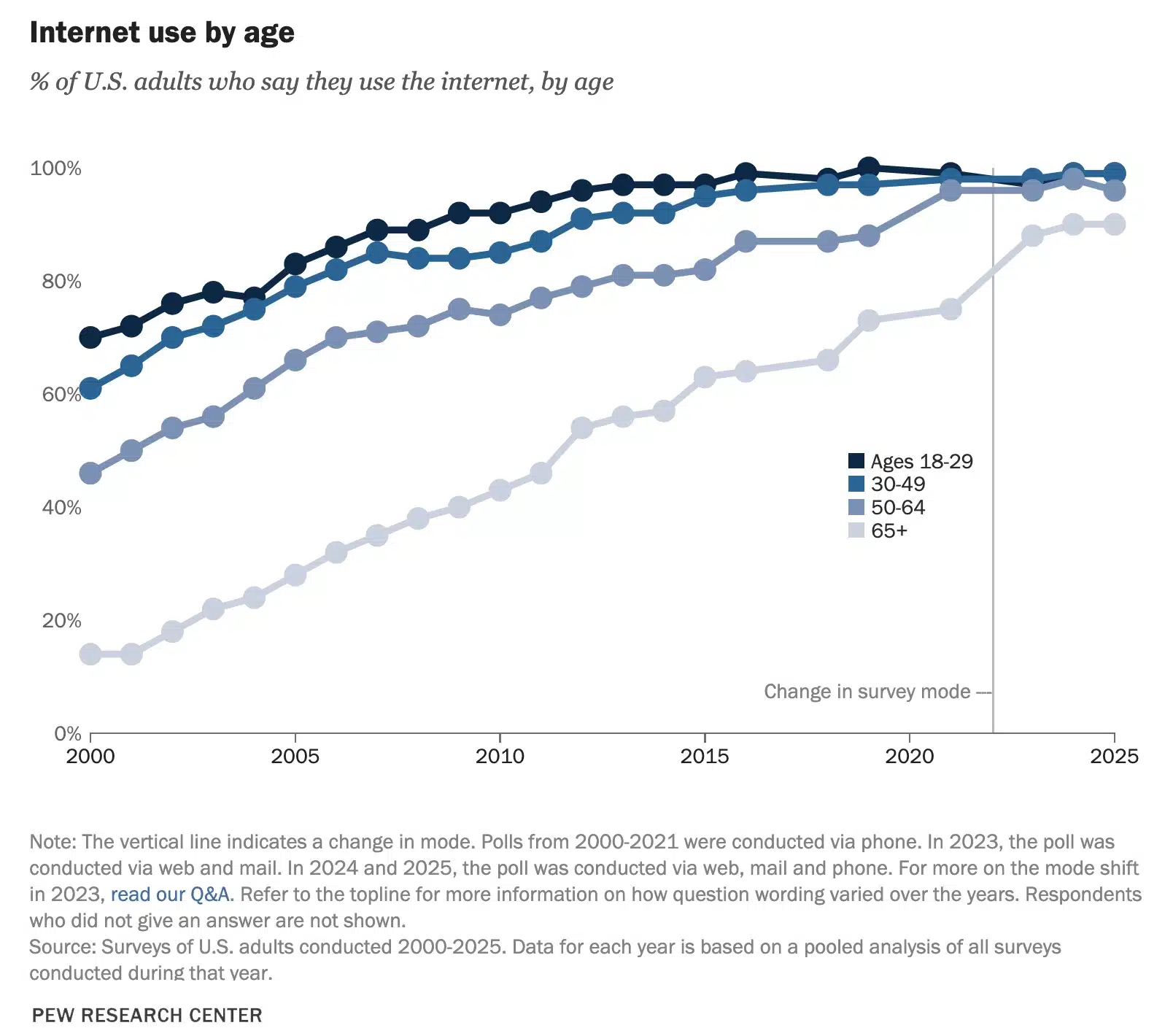
According to Pew Research Center’s 2024 survey, 90% of adults ages 65 and older are now online, compared with 98% of those ages 50–64. AARP’s 2025 Tech Trends report found that 91% of older adults now own a smartphone.

Noah Goldfarb
Digital Health SEO Specialist
“There is a dangerous assumption in digital health that seniors aren’t searching.
That might have been true in 2015.
In 2026, the idea that your 65+ demographic won’t Google you before enrolling is an outdated idea that leaves significant visibility on the table.”

The 80+ segment does pull down the average. But the 65–74 cohort—often the primary decision-makers for their own care—shows even higher adoption.
These seniors are searching. Like any other population, they have questions about their care options. They’re turning to Google for clarity and confidence, searching terms like, “chronic pain relief covered by Medicare,” “does Medicare cover virtual physical therapy,” and “best telehealth for diabetes management.”
Under your existing B2B2C model, capturing this demand was difficult—you couldn’t run paid search against a population you didn’t have listed access to.
ACCESS changes that equation. The Traditional Medicare population becomes targetable through organic and paid search in a way it wasn’t before.
What This Means for Your SEO Strategy
If you’re already investing in SEO, ACCESS gives you a reason to double down. Your content can now drive patient acquisition from a population that was previously out-of-reach.
Noah Goldfarb
Digital Health SEO Specialist
“The fact that this population was out-of-reach also means that many brands underinvested in pursuing them, bolstering the untapped opportunity.
If you haven’t prioritized SEO because your B2B2C model didn’t require it, now’s the time to reconsider.”
Build for High-Intent Searches
The instinct for many digital health marketers is to write top-of-funnel educational content—”What is arthritis?”, “why does my shoulder hurt in the morning?” This content has its place, but it’s typically not where patients convert.
For the ACCESS opportunity, prioritize landing pages targeting high-intent keywords:
- “Medicare-covered arthritis treatment in [City]”
- “Virtual physical therapy accepting Medicare”
- “Online chronic pain management for seniors”
- “Does Medicare cover [your service]?”
Our research shows that landing pages convert at dramatically higher rates than blog content—often by an order of magnitude. These are the searches where patients are ready to take action.
Informational content is great for broad brand awareness, patient education, and authority building, but don’t expect a senior population to frequently navigate from your blog, through the rest of your site, to a conversion event. This audience needs clear information and straightforward conversion pathways.
Enter your email to receive the full dataset of SEO performance for 400+ telehealth brands.
Understand the Traditional Medicare Audience
The Traditional Medicare population isn’t identical to the MA audiences you may be used to targeting. They’ve actively chosen not to enroll in a managed care plan, which may reflect different attitudes toward healthcare, technology, or institutional trust.
This has implications for your content strategy:
- Intercept traditional searches. Many seniors in this population will be searching for traditional solutions first—”orthopedic doctor near me,” “diabetes specialist [City].” Your digital health offering needs to show up as a compelling alternative, with clear explanations of how virtual care works and why it might be right for them.
- Prioritize clarity over jargon. “You can see a doctor from home, and it’s covered by your Medicare” beats “Our AI-powered telehealth platform delivers value-based chronic care management.” Many seniors—and their adult children who often research on their behalf—are unfamiliar with the innovative solution you’re offering. Meet them where they are. Help them understand, and focus not on education (“Here’s everything you need to know about our AI-enabled tech”) but confidence-building (“Here’s how our solution will help you, what costs to expect, how you know it’s safe, etc.”)
- Invest in visible trust signals. This population may be more skeptical of unfamiliar brands. Put the faces of real providers on your website. Show that your clinicians have real credentials. Include testimonials from seniors in similar situations. Display logos of recognized affiliated institutions and certifications. These trust signals will prove your legitimacy to Google, LLMs, and patients.
To discover what top online care delivery brands are doing to win in the current search environment, check out our latest Telehealth 20 Report.
The Compounding ROI of Organic Search
Paid acquisition costs tend to rise as competition increases—and ACCESS will bring new competition for this audience. SEO works differently: the authority you build now compounds over time. If you invest in organic search today, you’ll establish a resilient advantage that will keep CAC low and patient acquisition rates high as more players enter the space.
The AI Impact: Visibility Across Platforms
Under your current B2B2C model, your credibility is often pre-validated by the payer or provider relationship. When a member receives outreach that’s co-branded with Humana or their health system, the trust is built in.
Under ACCESS, patients discover you on their own. And increasingly, they’re vetting you through AI-powered tools.
Seniors Are Already Using AI (Even If They Don’t Know It)
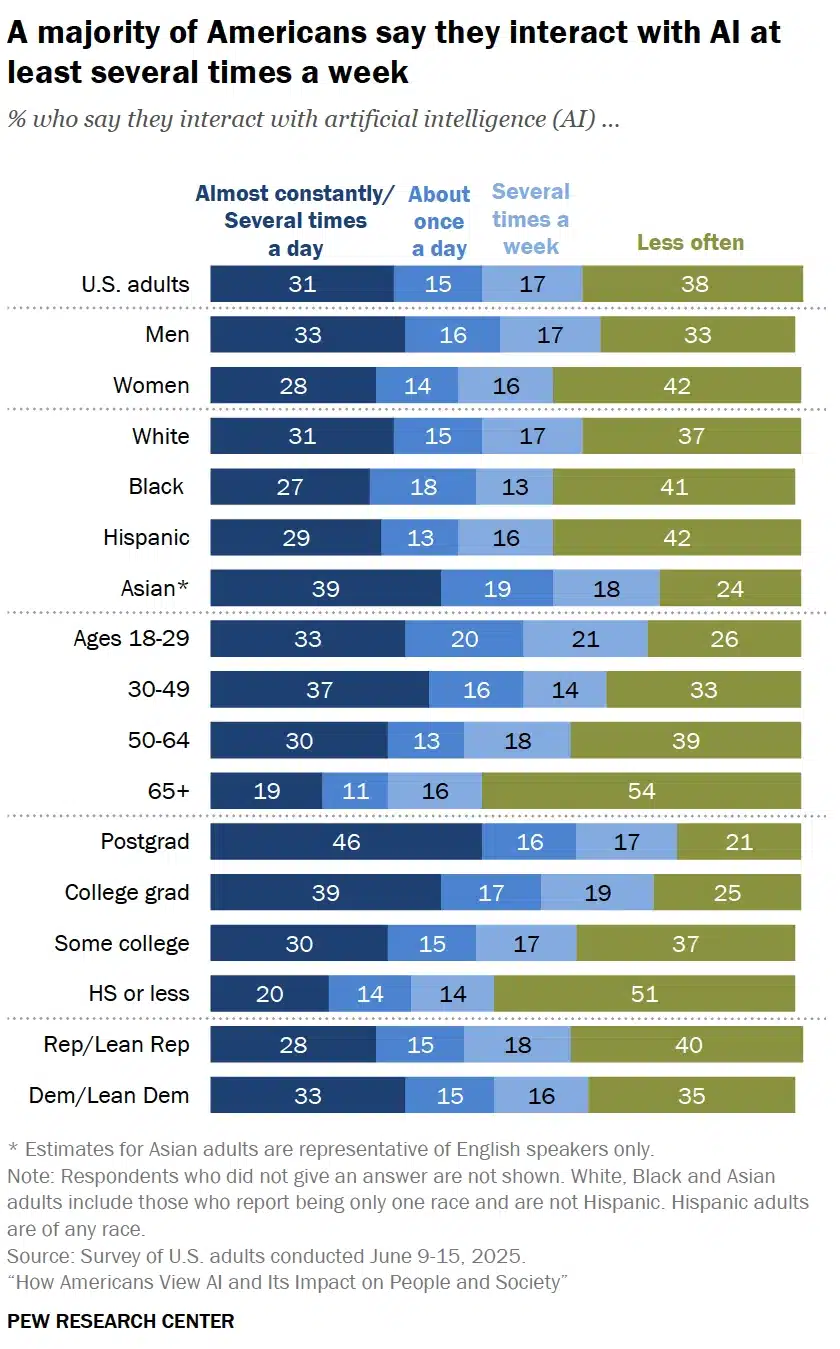
Seniors may be late adopters of dedicated AI tools like ChatGPT or Perplexity, but as AI search gets built into platforms they already use, like Google Search, Siri, or Google Assistant, they’re interacting with AI without necessarily realizing it.
Pew Research reports that 46% of Americans 65+ already interact with AI at least “several times per week.”
Our analysis of AI search traffic in digital health found that while LLM-referred traffic is still small (about 0.8% of organic traffic), it’s growing exponentially—and converts at 1.5x the rate of traditional organic traffic.
Manage Your Brand Sentiment Across the Web
When patients research you—whether via Google, Siri, ChatGPT, or another platform—what do they find? Trust signals and positive coverage? Or Reddit threads questioning your legitimacy?
For ACCESS patient acquisition, brand sentiment becomes a growth lever:
For years now, the SEO strategies that build real authority and deliver real growth have shifted from “SEO hacks”, like keyword-stuffing and link-building to more genuine activities, like best-in-class content (quality over quantity), online community engagement, and PR. This is truer than ever in the AI age, when forums like Reddit and review platforms like TrustPilot are increasingly influential in what LLMs say about your brand.
The Timeline: Why Starting Now Matters
Applications for the first ACCESS performance period (beginning July 2026) must be submitted by April 2026.
SEO doesn’t work like paid media; you can’t flip it on and expect immediate results. Building the content foundation, topical authority, and domain strength required to rank for competitive healthcare terms takes 6–12 months.
The upside is that the long-term gains of this investment last a long time after the last title tag is written; starting your SEO campaign now is what will allow you to stake your claim and hold onto it for years to come in the new ACCESS paradigm. Those who wait until the model is mainstream will be playing catch-up against competitors who already own the search results.
The Bottom Line:
Taking Advantage of A Massive Organic Patient Acquisition Opportunity
The ACCESS Model doesn’t replace your B2B2C strategy. Rather, ACCESS unlocks something new: direct access to 34 million Traditional Medicare beneficiaries via channels that were previously constrained.
SEO is one of the most high-leverage channels for capturing this opportunity. The Traditional Medicare population is online, they’re searching on platforms both old and new, and—for the first time—you can reach them directly.
The growth leaders who recognize this opportunity and pursue it accordingly will have a significant advantage. Will you be one of them?
Credits
Author

Noah Goldfarb
Director of Client Services
About the Author
Noah Goldfarb is Director of Client Services at Fire&Spark, where he leads the development of data-backed, conversion-focused SEO strategies for digital health brands. Get in touch to discuss how your organization can prepare for the ACCESS Model.
Reviewers

Lindsey Graff is a healthcare operator and consultant with deep experience building and scaling member acquisition and engagement programs in digital health. She has worked with health plans, virtual care companies, and value-based care organizations to design growth strategies that align incentives, data, and consumer experience. Lindsey brings a practical, execution-focused lens to programs like ACCESS, helping companies move from policy opportunity to real-world adoption.