275 AI Citations in 30 Days: How Proprietary Clinical Data Wins Visibility in AI Search

Industry: Digital Health

Executive Summary

A natural weight loss supplement brand needed to break through in an AI-dominated search landscape where pharmaceutical brands and established medical sites controlled the conversation around appetite suppressants. With newly published clinical trial data proving their product’s effectiveness, they partnered with Fire&Spark to transform proprietary research into AI-citable content that would position them as the authoritative source on natural appetite suppression.

Fire&Spark built a content piece anchored in the client’s own human clinical trial data, designed not just to rank, but to become the source AI models cite when answering questions about natural weight loss alternatives.

Within 30 days of launch, the content achieved 275 citation instances across major AI platforms, claimed position 1 on 14 of 20 tracked prompts, and dominated the trust and safety category with 108 citations.

Client Background

The client is a science-backed natural supplement brand operating in the competitive weight loss category. Their flagship product contains a patented plant-based extract supported by multiple peer-reviewed clinical trials, including a six-month randomized, double-blind, placebo-controlled study—a rarity in the natural supplement space.

The brand competes with both prescription medications like semaglutide (Wegovy/Ozempic) and tirzepatide (Zepbound/Mounjaro), as well as countless natural supplements making unsupported claims. Their differentiation lies in rigorous clinical evidence showing fat loss with muscle preservation. But this scientific authority meant nothing if AI models weren’t surfacing their brand when consumers asked about weight loss alternatives.

The Challenge

Overview

The client faced a visibility problem specific to the AI search era: how do you establish brand authority when consumers are getting answers directly from AI models without clicking through to websites?

Traditional SEO wasn’t enough. The appetite suppressant category is dominated by pharmaceutical brands with massive domain authority and established medical sites producing generic educational content. Ranking in traditional search results wouldn’t guarantee AI citation, and AI citation was increasingly where the conversation happened.

The timing was strategic. The client had just completed a major clinical trial: six months of rigorous data showing over 6x greater fat loss versus placebo, with muscle mass preserved. This was the kind of proprietary, first-party evidence AI models are built to prioritize, but only if the content was structured correctly.

The brand needed to become the source AI cites when consumers ask whether natural appetite suppressants actually work, how they compare to prescription options, and whether specific products deliver on their promises.

The Solution

Fire&Spark developed a content strategy built on one core insight: AI models preferentially cite proprietary data, first-party expertise, and firsthand experience. Citation is the stepping stone to brand recommendations, which leads to revenue. The content had to be constructed as the citable source on the question, not just optimized to rank for it.

The A+ Content Process

Fire&Spark applied its A+ content methodology to create a resource targeting a high-intent question in the natural weight loss category. The piece was timed to the client’s newly published clinical trial.

The content strategy centered on three elements:

Proprietary clinical trial data as the foundation. Rather than building the piece on generic offsite research, Fire&Spark structured the entire article around the client’s six-month human trial. This included specific metrics, and the data wasn’t buried—it was presented clearly with visual assets and direct comparisons to pharmaceutical benchmarks.

Positioning as the authoritative answer. The piece didn’t just summarize what appetite suppressants are. It explained the satiety hormone pathways, compared natural versus pharmaceutical approaches, and provided context AI models need to confidently cite a source. The structure anticipated the questions AI would field: mechanism of action, efficacy data, safety profile, and head-to-head comparisons.

Strategic offsite visibility reinforcement. Search performance was supported by third-party PR and backlink outreach targeting high-authority domains. Fire&Spark identified the specific publications and platforms where visibility mattered most and coordinated the client’s PR team to secure links back to the core article. This dual approach, onsite citability plus offsite authority signals, gave AI models multiple reasons to surface the brand.

Results

The content achieved AI visibility faster than traditional SEO timelines, with measurable impact within 30 days of launch.

AI Citation Performance

275 citation instances across 157 citing runs, spanning 20 distinct tracked prompts

Position 1 on 14 of the 20 prompts, dominating high-value brand and comparison queries

Trust and Safety category: 108 instances across 5 prompts—the strongest performance area. A single skepticism-focused prompt drove 48 instances at position 1. The clinical trial data directly addressed consumer doubt with specific, verifiable results.

Comparison prompts: 99 instances across 9 prompts, including direct matchups against Mounjaro, Ozempic, Wegovy, and Zepbound. The content’s structure allowed AI models to extract relevant comparison data when users asked how natural alternatives stack up against pharmaceuticals.

Brand prompts: 68 instances across 6 prompts, establishing the client as the cited authority when consumers search by name.

Platform breakdown: Gemini accounted for 256 of 275 instances. ChatGPT showed broad coverage (10 prompts) with thinner citation density—an area to watch as citation patterns evolve.

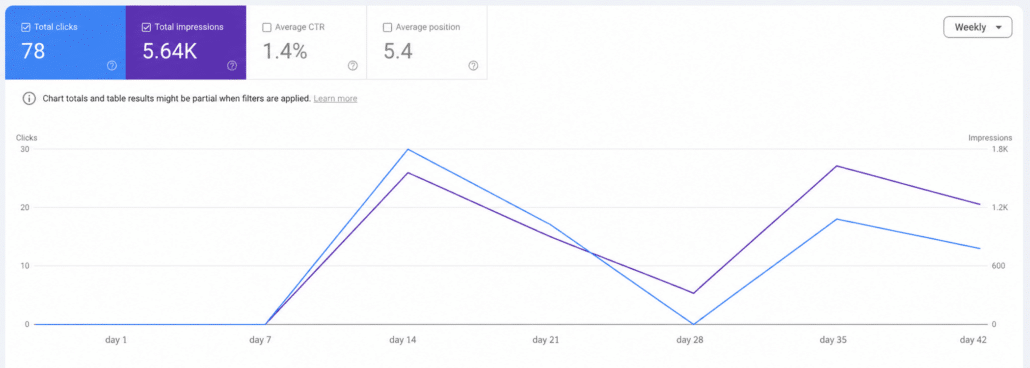
Traditional Search Performance (First 45 Days)

  • 5.64K impressions, average position 5.4
  • 78 clicks, 1.4% CTR
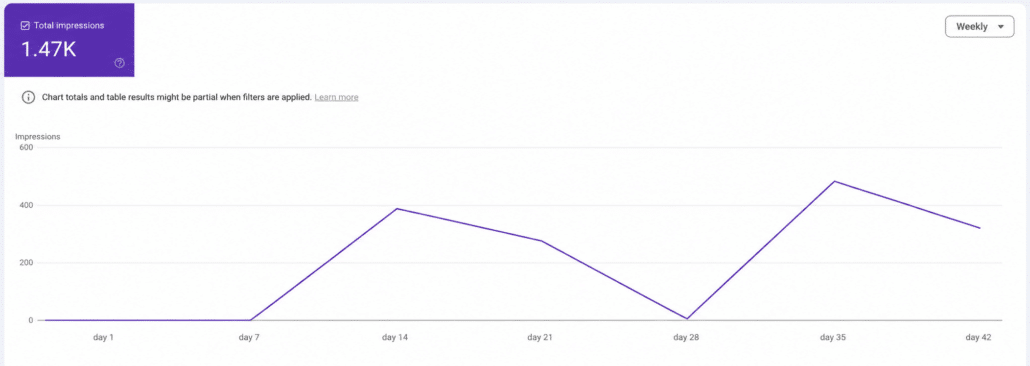
  • 1.47K impressions (26%) from Google’s generative AI features, showing early pickup in AI-enhanced search results

What This Means

These are early results from approximately 30 days of data. The window shows rapid AI adoption, with the brand claiming position 1 on the majority of tracked prompts and dominating the trust and safety category where consumer skepticism runs highest.

The dual performance, strong AI citation alongside traditional search visibility, shows how proprietary clinical data becomes a citation magnet when structured correctly. AI models are surfacing the brand not just for general queries but for direct comparisons against prescription medications: exactly the consideration set the client needed to own.

Looking Forward

The content continues to gain traction across both traditional search and AI platforms. With only 30 days of data captured, the citation trajectory suggests ongoing growth as more AI models index the content and consumers ask increasingly specific questions about natural weight loss alternatives.

The framework established here; proprietary data as the citability foundation, reinforced by strategic offsite visibility, creates a repeatable model for the client’s other clinical assets and product categories. Each new trial, each new piece of first-party evidence, becomes another citation opportunity in the AI search landscape.

Why Fire&Spark?

How do you establish brand authority when AI models are answering consumer questions without website click-throughs?

Fire&Spark’s answer: become the source AI cites by structuring proprietary data for maximum citability, then reinforce that signal with strategic offsite visibility.

The results show what’s possible when content strategy aligns with how AI models prioritize information. Within 30 days, a natural supplement brand competing against pharmaceutical giants achieved 275 AI citations, position 1 on 70% of tracked prompts, and category dominance in trust and safety—the exact queries where consumer skepticism is highest and brand credibility matters most.

Citation is the new currency of brand visibility. Fire&Spark built content that AI models reach for first when consumers ask whether natural appetite suppressants actually work.

More Results

See how other digital health clients leveraged Fire&Spark’s SEO expertise for measurable success:

Ready to See How SEO Can Drive Results for Your Business?

Connect with Fire&Spark’s SEO strategists to discuss:

  • Aligning your SEO strategy with revenue goals
  • Identifying high-value customer acquisition opportunities
  • Developing a custom, ROI-focused SEO approach