by Noah Goldfarb ⏐ February 25, 2026
In digital health, capacity is not just an operations issue. It is a growth variable.
When appointment availability slips, conversion rate weakens, CAC rises, and channel performance gets noisy. Teams often misread this as a marketing problem—when the real issue is access.
The brands that scale through this do three things well:
- Build a simple, shared capacity model
- Run a tight Growth × Ops cadence
- Pull the right levers quickly when supply and demand drift out of sync
Key Takeaways
- Capacity is a conversion lever, not just an ops metric.
- Time-to-first-visit (TTFV) is the bridge KPI between growth, access, and patient experience.
- You do not need a perfect forecasting system; you need a shared spreadsheet model + decision cadence.
- Marketing should pace spend within availability constraints, not in isolation.
- Staffing mix (W2 core + contractor flex) directly affects growth reliability.
Why Capacity Gets Misdiagnosed
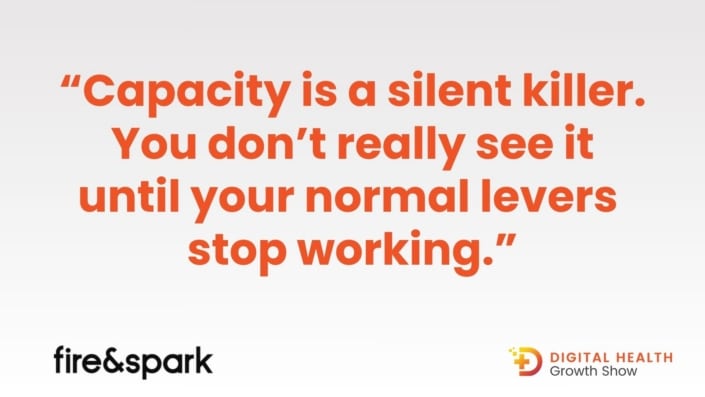
Capacity rarely breaks the funnel in an obvious way. It degrades it quietly:
- fewer starts
- more drop-off before scheduling
- weaker conversion in previously strong markets
- “random” CAC volatility
One growth leader described the trigger as the moment “experiments stop working.”
Another described the platform trap clearly:
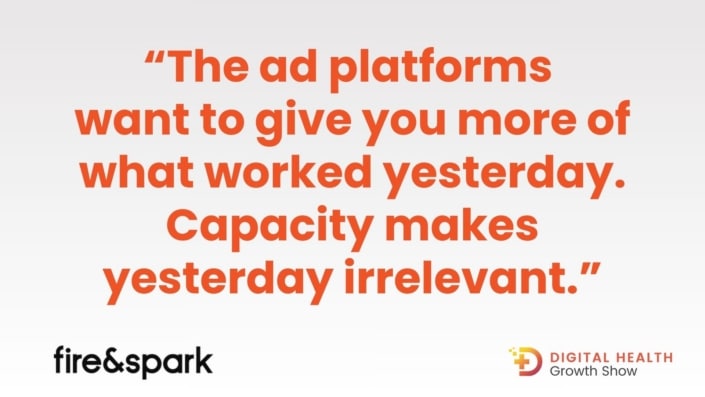
“The platforms want to give you more of what worked yesterday. But the thing they don’t know is that availability is what kept conversion high—and it’s now gone.”
That is the capacity crunch: demand generation systems optimize into markets where short-term supply may already be consumed.
The Operating System That Works
1. Build a model you will actually use
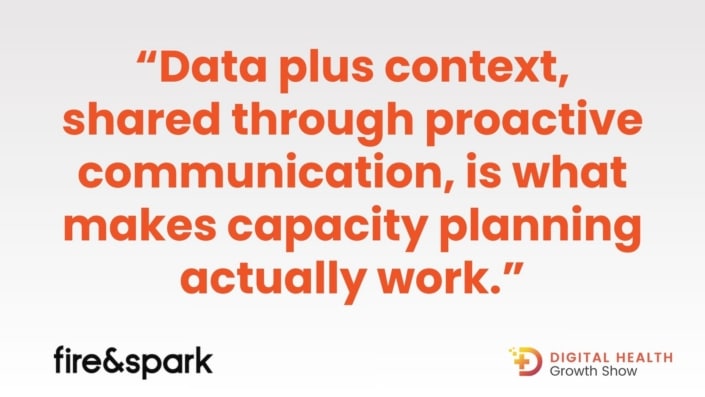
Keep it simple. A spreadsheet is enough if growth and ops both use it weekly.
Operational inputs
- Clinician roster status (active, onboarding, leave, offboarding)
- Hiring pipeline + expected start dates
- Credentialing and enrollment timelines
- PTO assumptions
- Utilization assumptions
- Expected churn
Growth inputs
- Demand by state, payer, service line
- Conversion rate by availability window
- CAC by geo/channel
- Lead-to-patient lag (especially in education-led categories)
- Short-term pacing targets + longer-range goals
You are not building a finance thesis. You are building a shared decision tool.
2. Run two cadences
High-performing teams manage capacity on two clocks:
Monthly/quarterly (strategy)
- market expansion priorities
- payer strategy
- specialty launches
- hiring targets + staffing structure
Weekly/daily (execution)
- next 3–5 day availability check
- budget pacing by market/service line
- rapid reallocation when access tightens
- operational toggles for fragile markets
One operator described adjusting “at the hour” when needed. That sounds extreme until you see how quickly availability shocks hit conversion.
3. Pull the right levers when mismatch appears
Growth levers
- shift spend away from constrained markets before booking friction spikes
- concentrate spend where near-term slots exist
- protect high-intent conversion paths in markets with stable access
- maintain campaign structure that allows geo/service-line control
If campaigns are too consolidated, you lose the ability to manage around supply in real time.
Ops levers
- temporarily route multi-licensed clinicians to constrained states
- tighten scheduling logic to preserve short-window access
- stabilize at-risk markets while hiring/credentialing catches up
These are often the highest-leverage short-term actions because they work faster than net-new supply.
The Bottleneck: Onboarding Speed
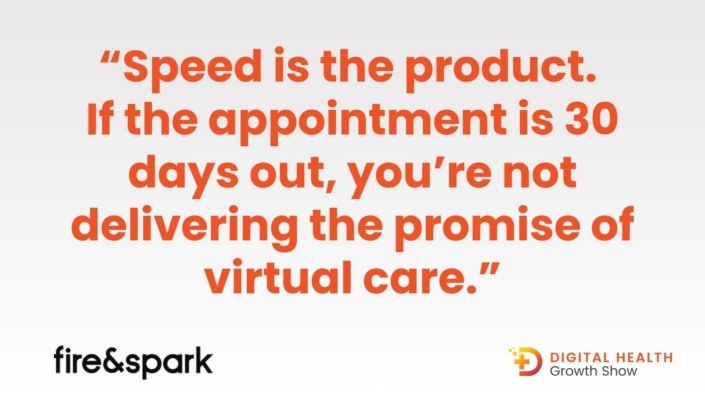
If clinician onboarding takes too long, growth pays for it in wasted demand and unstable CAC.
Practical fixes:
- one source-of-truth onboarding intake
- automated reminders immediately after hire
- essential day-one training only, then phased enablement
- tighter vendor workflows for credentialing/enrollment
Onboarding speed is not just an ops metric. It is throughput for growth.
Staffing Mix Is Part of Digital Health Capacity Planning
A practical pattern for scaling teams:
- Early: contractor-heavy for flexibility
- Scale: add W2 core for predictability and operating control
- Mature: keep a contractor flex layer for demand spikes
W2 capacity improves forecast reliability. Contractor capacity absorbs uncertainty. The right blend depends on specialty and market variability.
The Dashboard Upgrade Most Teams Need
Most performance reviews ask: What did we spend, and what did we get?
Capacity-aware teams also ask: What booking experience did patients hit?
Add these now:
- median TTFV
- % of patients seeing availability within 3–5 days
- conversion rate by availability tier (0–2, 3–5, 6–10, 10+ days)
When conversion dips, review these before changing creative, bids, or funnel design.
The Digital Health Growth Show by Fire&Spark
In the latest episode of the Digital Health Growth Show, Noah Goldfarb and Chris Turitzin spoke with Allara Health’s growth and clinical ops leaders about how teams align patient demand with real provider capacity. The replay breaks down the exact systems, cadence, and tradeoffs in practice.
Can You ‘Solve’ the Capacity Crunch?
You do not “solve” capacity crunch once. You manage it continuously.
The best teams win with tighter feedback loops:
- shared model,
- shared ownership,
- fast decisions between growth and ops.
Or, as the leaders put it: it takes a village.
Make your growth plan capacity-aware this week
If CAC is creeping or tests are flattening, audit capacity before blaming creative. Start with two metrics: median time-to-first-visit and % of patients seeing availability within 3–5 days.

Noah helps run Fire&Spark, where he leads organic growth strategy (SEO/AEO) for the innovative brands that are transforming healthcare, like Hinge Health, Bicycle Health, Allara Health, and Mochi Health. He also runs the Digital Health Growth Mastermind, a community exclusively for digital health growth/marketing leaders who share insights via online communities, live virtual events, high-quality data analysis, and in-person meetups. You can reach out to him at [email protected]